Nicko Tovar wins Best Graduate Student Paper Award
Posted on January 30, 2026
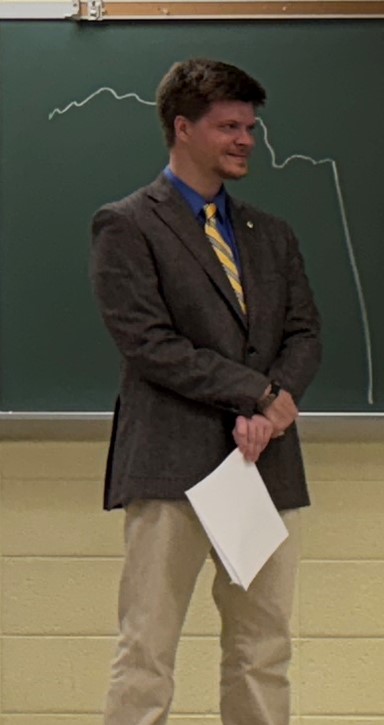
GES doctoral student Nicko Tovar won the Best Student Paper Award at the November 2025 SEDAAG meeting in Lexington, Kentucky. The title of his paper was: Variation in Bus Transit Infrastructure Provision, Ridership, and Equity: Evidence from North Carolina. Congratulations Nicko!
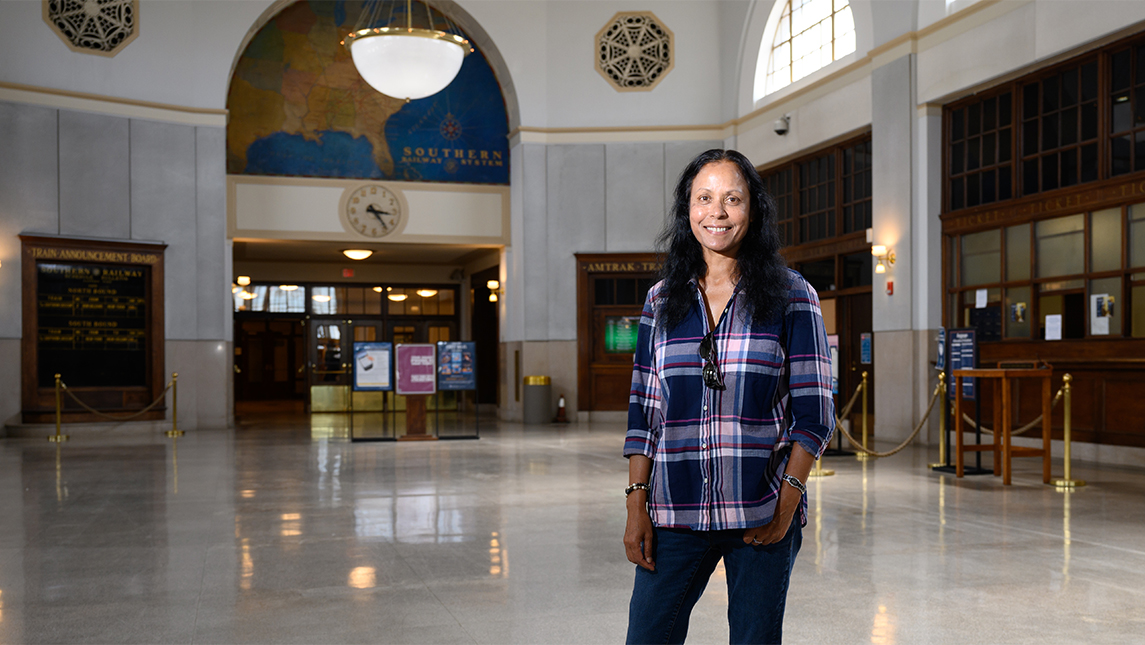
L to R: Dr. Maegen Rochner (University of Louisville; chair of the Awards Committee, doctoral student Nicko Tovar (UNCG),and Dr. Selima Sultana (UNCG; President of SEDAAG)
Congratulations to the GES December 2025 graduates!
Posted on December 16, 2025
The Department of Geography, Environment, and Sustainability congratulates all of its December 2025 graduates! The Masters degree commencement was held at the coliseum, and the doctoral hooding ceremony was held at the UNCG auditorium this year, a few minutes’ casual stroll from the Graham Building. Commencement weather was wonderful (clear and cool), and large crowds of supporters were on hand.
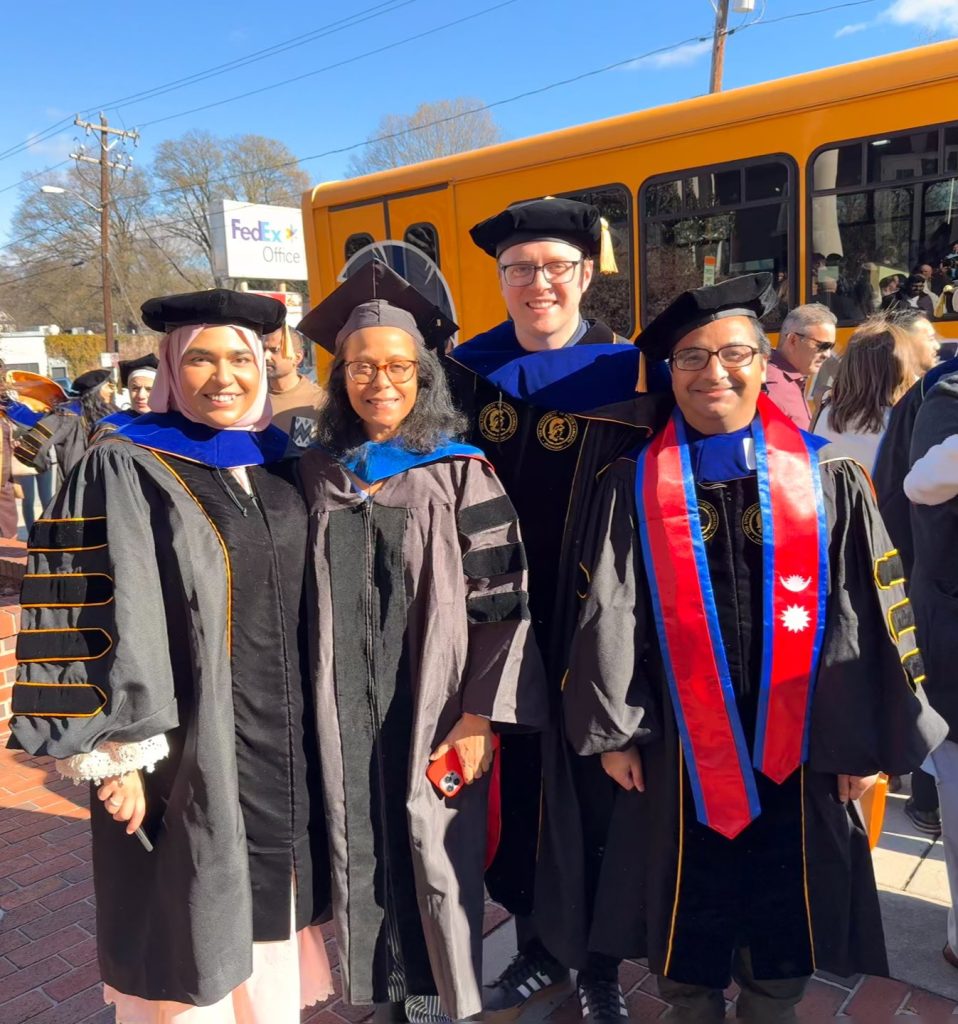
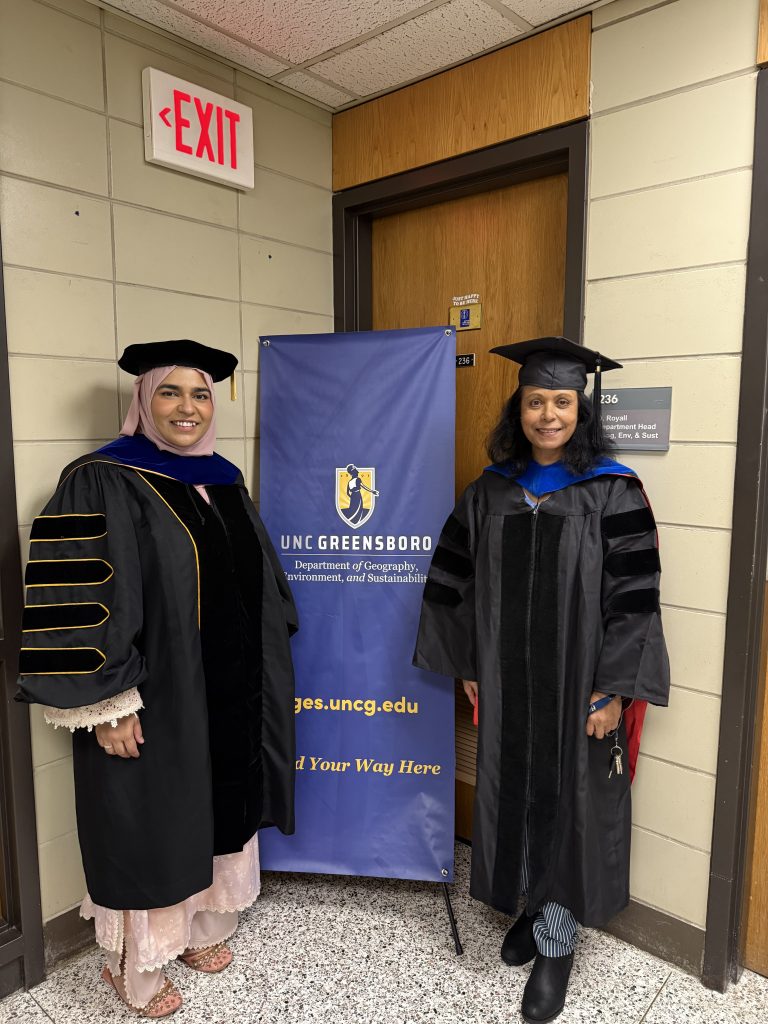
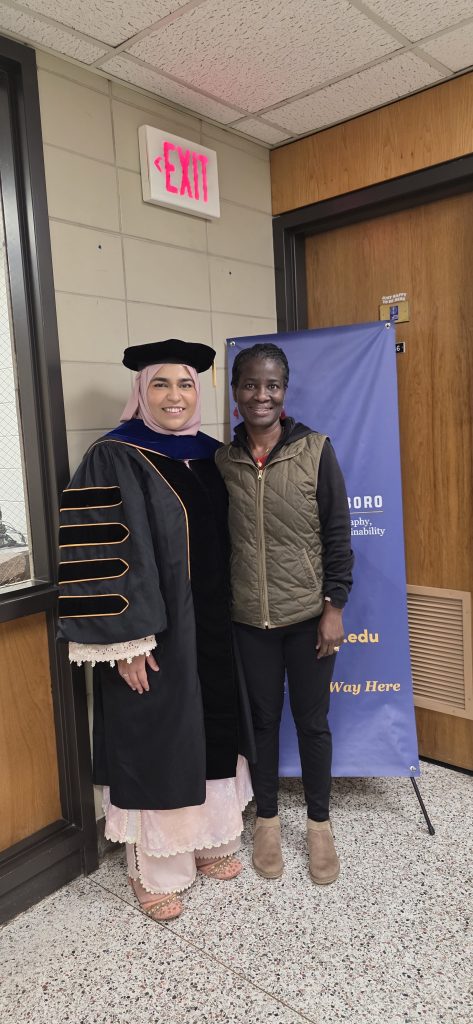
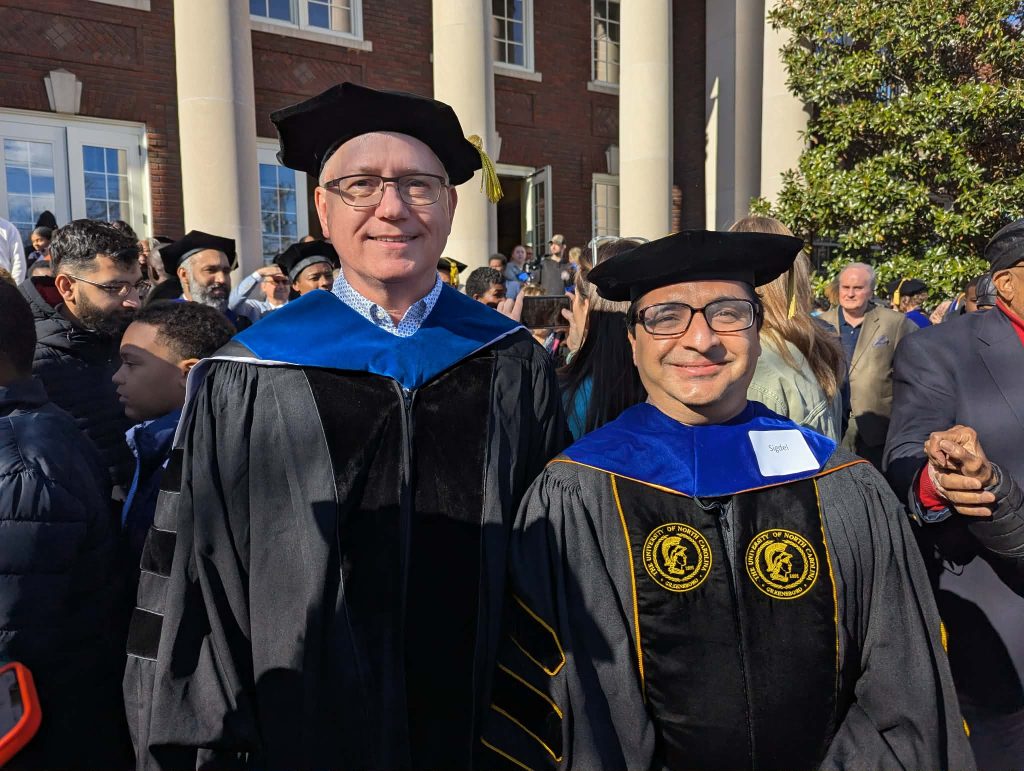
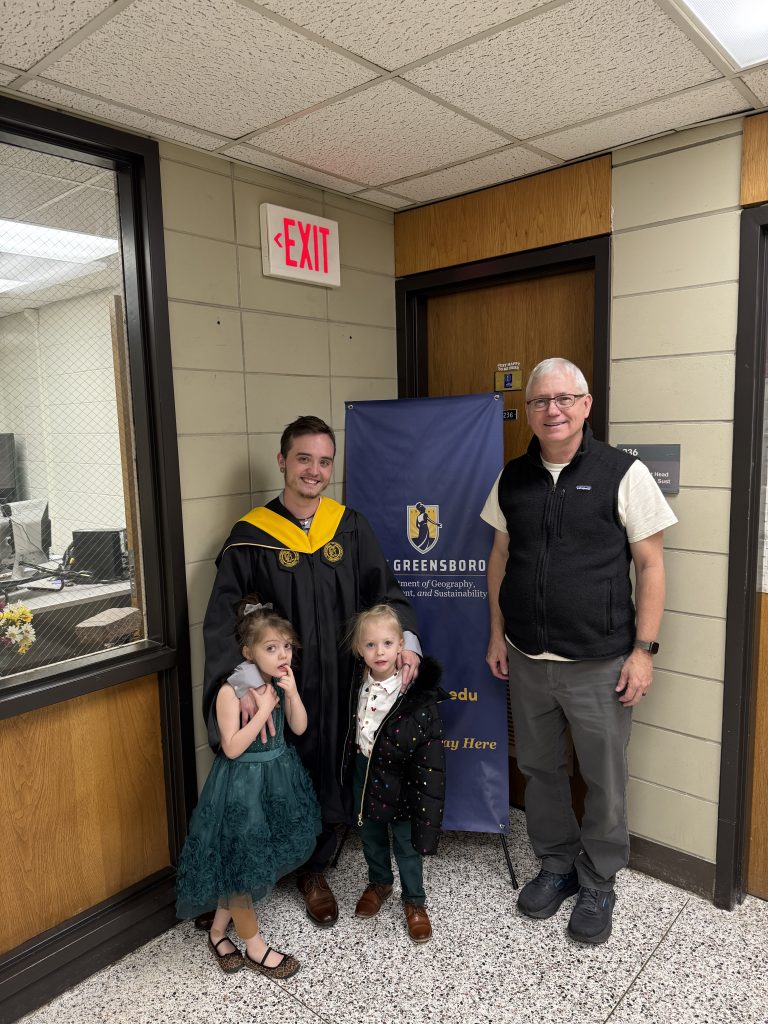
Dr. Nabeela Farhat and GES faculty Dr. Selima SultanaDr. Nabeela Farhat and GES faculty Dr. Plaxedes ChitiyoFrom L to R: GES faculty member Dr. Dan Royall, Dr. Nabeela Farhat, Dr. Rajesh Sigdel, Dr. Gregory Carlton, and GES faculty member Dr. Selima Sultana. Drs. Farhat, Sigdel, and Carlton participated in the doctoral hooding ceremony Thursday, December 11, 2025.L to R: Dr. Nabeela Farhat, GES faculty Dr. Selima Sultana, Dr. Gregory Carlton, and Dr. Rajesh Sigdel.Dr. Dan Royall and Dr. Rajesh Sigdel following the ceremony. Dr. Royall, who served on Raj’s dissertation committee, hooded Dr. Sigdel on behalf of his advisor GES faculty member Dr. Sarah Praskievicz, who had passed away in August. Sarah would have been so proud!Avery Chapman graduates with the M.A. in Geography, Friday December 12, 2025! Dr. Royall and the entire GES faculty congratulate Avery and all of our other outstanding GES graduates this fall!
John Shields, president of the Kappa Phi chapter of Gamma Theta Upsilon, the international honor society for geography.
We are sad to report the loss of GES family member and doctoral student John Shields. The department learned of John’s passing on October 20 from his father who had been in frequent contact over the prior month regarding his son’s illness.
John had been part of the GES family for many years as he earned his bachelor’s and then master’s degrees in geography. He was well known throughout the department and had often traveled with GES faculty and fellow students as part of multiple summer field courses. It was always fun to talk with John, who had a great sense of humor. You might discuss travel, places, geographic ideas, and other professional interests, but also his beloved dogs, piloting drones (he was an expert licensed drone pilot), and many other interesting subjects.
John was highly regarded for his service as president of the geography honor society Gamma Theta Upsilon, a position he held until his passing, and was also well known for helping with the production and food for GES Club at every meeting. John was quick to help with anything needed; from unloading unanticipated equipment shipments, to tackling a difficult Science Olympiad event on short notice, he was there when you needed someone. He was twice recognized with the Hidore Award for service to the department and discipline of geography. Although John was always known to be an engaged member of the GES community, few understood the great depths of his affection for the department, which his family later communicated to us. He was a wonderful student, colleague, and person, and our hearts go out to John’s family and friends, and to our own GES family which will never be quite the same without him.
At the Bengkulu University Turtle Preserve, GES Field School 2017, Bengkulu, Indonesia
GES welcomes a new faculty member, Dr. Bhuwan Thapa!
Posted on October 30, 2025
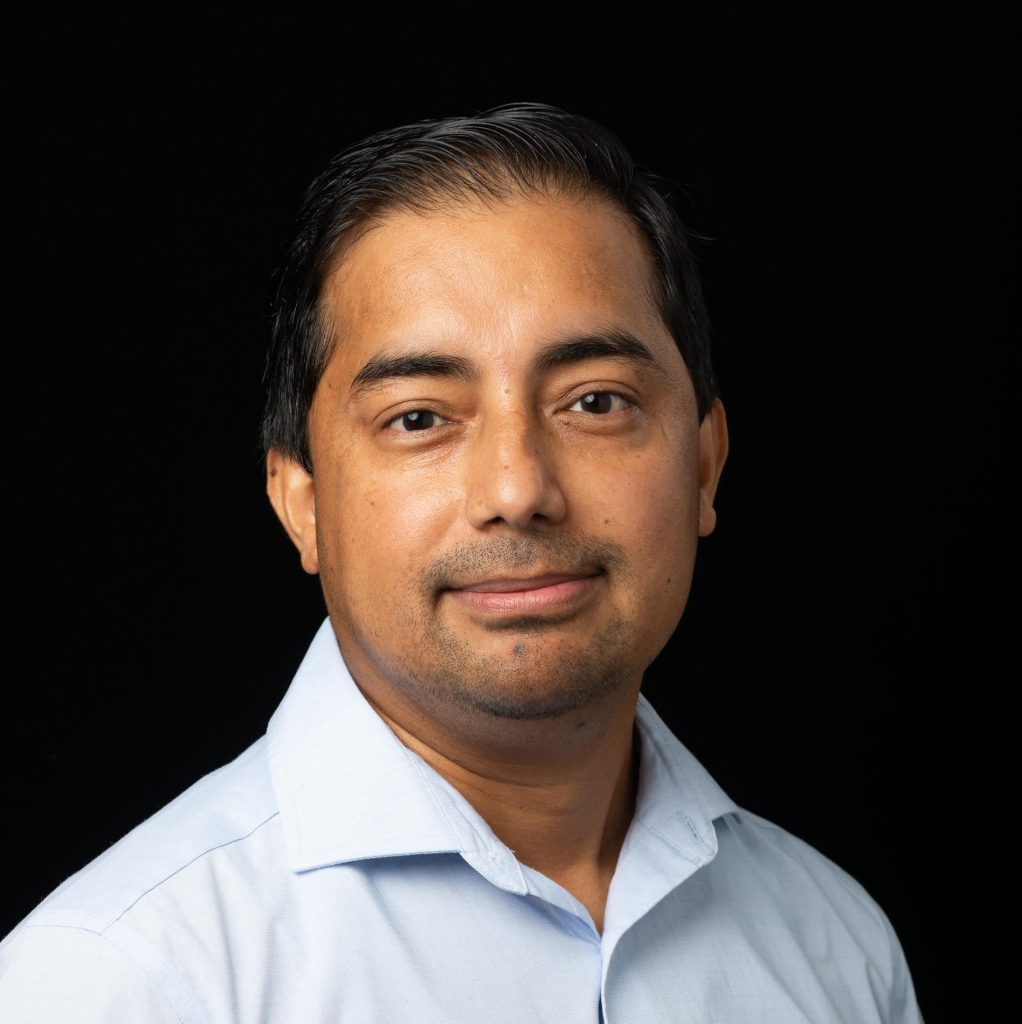
Dr. Bhuwan Thapa
Dr. Bhuwan Thapa joined GES in Fall 2025 as an assistant professor in urban sustainability. His research focuses on nature-based solutions for climate risk management, urban climate resilience & adaptation, hyperlocal air pollution, geospatial analysis, agroforestry and urban food systems.
Dr. Thapa received BS degrees in Environmental Science from St. Xavier’s College (Nepal) and from McNeese State University, an MPP (Masters in Public Policy) from the University of Maryland, and the PhD in Geography from the University of Arizona. He come to GES by way of Appalachian State University where he served in a similar position in the Department of Geography and Planning.
Dr. Thapa has over 20 scholarly publications including a newly released e-book entitled An Introduction to Planning for Healthy and Just Cities co-authored with Dr. Christine Quattro. He is a highly versatile scholar who is teaching our North Carolina Environments course and will be taking on several others in planning, environment & sustainability, and GIS in future semesters.
Welcome to GES, Bhuwan! We are very excited to have you on our faculty.
It is with deep sadness we share that Dr. Sarah Praskievicz, an associate professor in UNC Greensboro’s Department of Geography, Environment, and Sustainability (GES), died on Aug. 11, 2025, at her home in Greensboro, following a valiant 15-month battle with cancer. Praskievicz taught and conducted research in the areas of hydrology, fluvial geomorphology, and water resources. She was a consummate geographer, having visited all seven continents in her short 39 years. More importantly, she was a consummate human being and colleague, with a generous spirit, contagious (and loud!) laugh, and joie de vivre (joy of living) that brightened any room or outdoor space she entered.
Praskievicz joined UNCG in 2018 after serving as an assistant professor at the University of Alabama. She had a formidable record of scholarship for someone at her career stage, with ~40 peer-reviewed journal articles published in leading journals of her field. Much of her work was grant-supported through the National Science Foundation and other agencies. As family and friends noted, Praskievicz had a vision, devised a plan, and remained singularly focused on completion of her varied projects. As she wrapped up 13 months of chemotherapy and radiation treatments in May with what she thought was a positive prognosis, she could be found back in her office, resuming her work, re-connecting with collaborators, compiling her dossier for promotion to full professor, and ensuring one of her Ph.D. students successfully defended his dissertation before starting a new position.
Praskievicz was born in Southbridge, Mass., and raised until her teenage years in Blue Hill, Maine, a stone’s throw from Acadia National Park. Her love of science was nurtured by many, especially her 6th grade science teacher Ms. Hudson, who had the kids dissect a moose, enlisted Sarah to be caretaker for the small stable of lab animals during summer months, and generally encouraged her outdoor explorations.
Her father Paul’s work took the family (mother Larrilee and brother Adam) to Portland, Oregon. She spent her teenage years in the shadow of Mt. Hood, where her fondness for the freedom wilderness offers was honed and refined. Bored by the lack of challenge in high school, she earned her GED at age 16 and completed her associates degree at Mt. Hood Community College before enrolling in Southern Oregon University in Ashland, where she received her B.S. in Environmental Studies in 2006. She would go on to earn an M.S. in Geography from Portland State (2009), and a Ph.D. in Geography from the University of Oregon (2014).
At Oregon, she was an integral part of the “River Rats,” a group of water-centered geographers, mostly women scientists, which provided a professional network, friend group, and mutual aid cohort that endures. She was also active in the River Field Studies Network and held leadership roles in the Southeastern Division of the American Association of Geographers (AAG), and the Water Resources Specialty Group of the AAG.
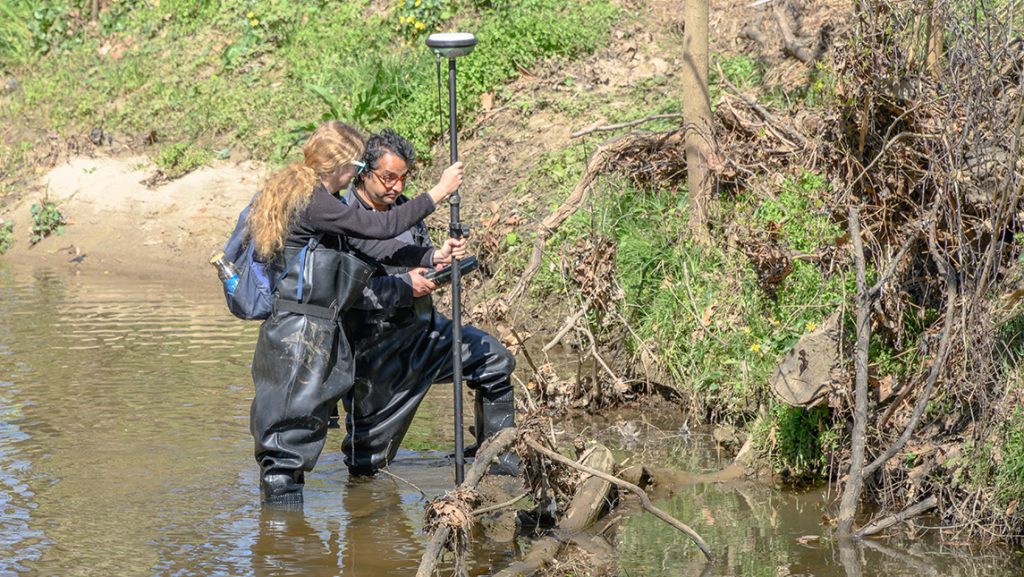
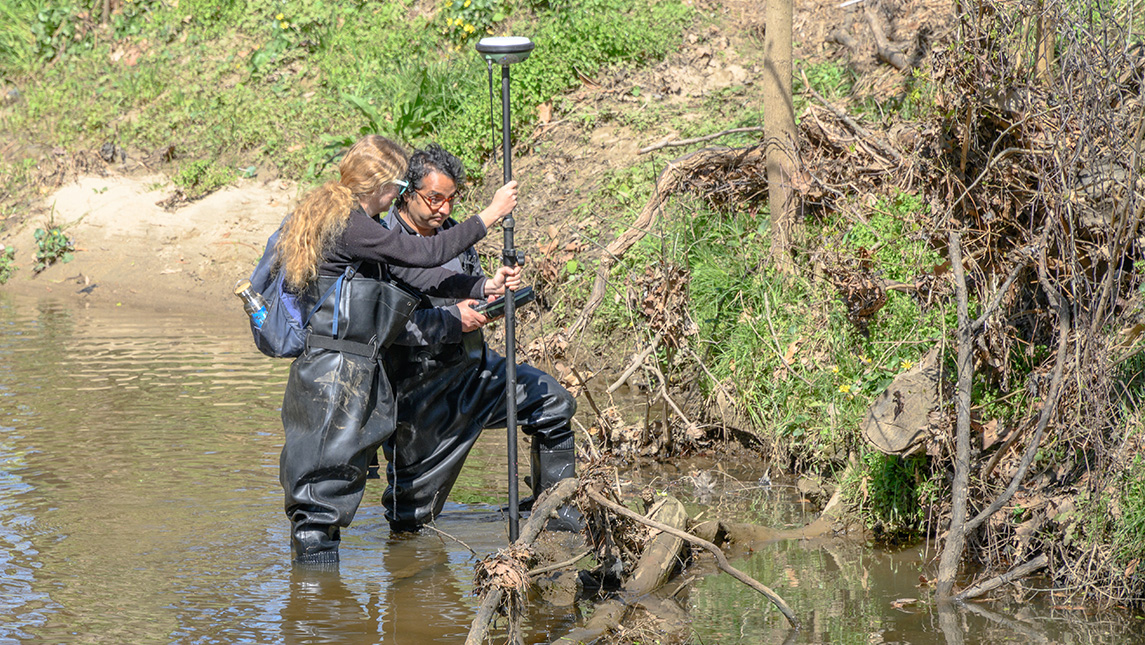
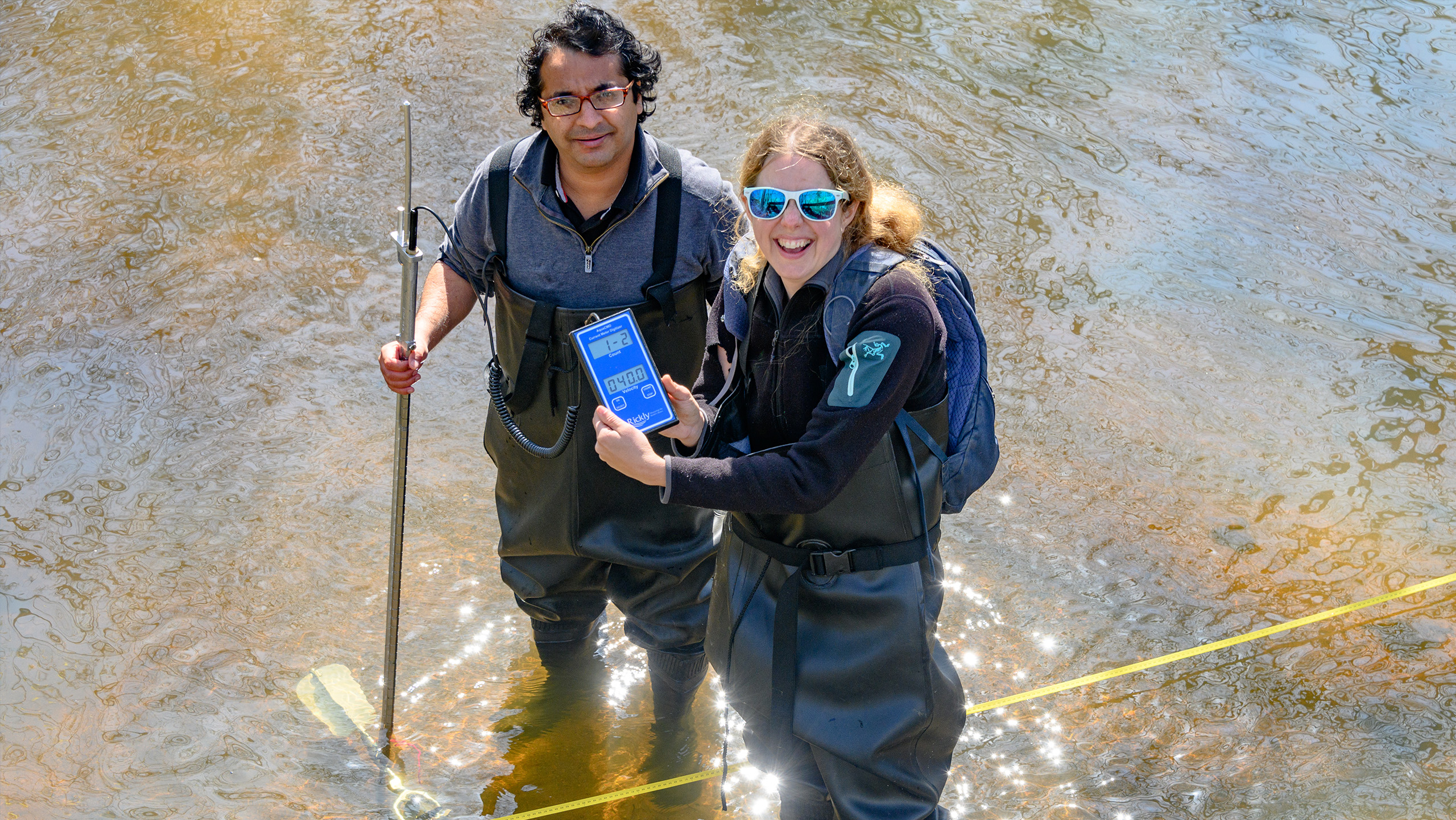
Praskievicz was happiest outdoors. She could be seen walking the two miles each way to and from campus along Spring Garden St., or hoisting her arms up in her trademark triumphal pose when she reached the highest point on any given trail. Atop Humphreys Peak, she would proudly recount, she was the highest person in Arizona on that day. (Puns were among her strong suits). Most of all, she was happiest in the rivers and streams she made her professional calling, from North Buffalo Creek in Greensboro, to the coastal plains of Alabama and North Carolina, to the Great Smoky Mountains, to the San Juan and many other great Western rivers, to the headwaters of the Ganges. She had waders and was willing to travel, often accompanied by student researchers and other collaborators.
Her grit and fortitude were awe-inspiring: at her last AAG meeting in Honolulu, she climbed to the top of Diamond Head while in excruciating pain caused by what would turn out to be the tumor that had already fractured her pelvis. Prior to her illness, she had hiked many of the world’s most daunting trails, including Mount Kilimanjaro and the Kalalau Trail on the Napali Coast, Kauai, Hawaii.
In addition to her A.A., B.S., M.S., and Ph.D. degrees, she received certifications as a Wilderness First Responder and in Swift Water Rescue. Beyond the great outdoors and travel, her hobbies included playing the ukelele, reading and watching sci-fi, listening to show tunes and the Indigo Girls, and playing trivia.
Dr. Praskievicz, cherished colleague and friend, devoted mentor and educator, and passionate advocate for Planet Earth, will be dearly missed.
Tributes
“Dr. Sarah will always be my Guru. We spent many unforgettable days exploring the Smoky Mountains and the local creeks of Greensboro together for research. Her wisdom, guidance, and passion left a lasting impact on me. She will be deeply missed.”
– Raj Sigdel, student of Dr. Praskievicz
“I worked with Sarah on the N. Buffalo stream project at Revolution Mill and along the College Branch in Greensboro. We gave tours to the community and her various classes. She energized the group/audience and made learning fun and engaging. I was very sad to hear of her passing as she always had a go-to attitude and a drive for success in herself and for her students. I will miss her laugh and her kindness. Rest In Peace, Sarah … you have left a lasting legacy with your students and in the world.”
“I remember Sarah’s beautiful smile and quiet demeanor. She was a great colleague, who was incredibly good at what they did and always willing to help. She travelled the world, all the seven continents, connecting with nature, people, and life. Through her stories and adventures she shared with us, she inspired me to get outdoors more – to stop waiting and just go for it. We will miss her.”
– Plaxedes Chitiyo, colleague in GES Department at UNCG
Dr. Selima Sultana Receives the AAG TGSG 2021 Edward L. Ullman Award for Outstanding Contribution to the Field of Transport Geography
Posted on March 31, 2021
Dr. Selima Sultana, Professor of Geography, Environment, Sustainability, is the recipient of the 2021 Edward L. Ullman Award from the American Association of Geographers Transportation Geography Specialty Group (AAG TGSG) (http://aag-tgsg.org/index.html) for her outstanding contribution to the field of transport geography. This is the most prestigious international award in transportation geography offered by the AAG TGSG since 1990 (http://aag-tgsg.org/). The award is named by Edward Louis Ullman (1912 – 1976) who was a highly influential transportation geographer and spent most of his academic career at the University of Washington (http://aag-tgsg.org/past.html).
Dr. Sultana has been engaged in the field of transportation and urban geography for 20 years and made significant contributions to commuting research in both the theoretical and applied domains, and is recognized internationally as a transportation researcher, teacher, and advisor. Her work has focused on two critical areas: first, how processes of urban growth and resulting spatial characteristics changes affect commuting and transportation decisions; and second, how transportation impacts accessibility and spatial equity for different income, family structure, racial, and ethnic groups. In addition to authoring a book on transportation modes across the world, she has published more than 50 refereed journal articles, book chapters, and research reports, as well as 11 book reviews, blog posts, other scholarly writings, numerous invited presentations and keynote speeches, and conference presentation. Her publications appear in a wide variety of outlets including some of the highest-quality journals in her fields of specialization, including the Annals of the American Association of Geographers, Computers, Environment and Urban Systems, Urban Studies, Urban Geography, Journal of Transport Geography, and Transport Policy. Her research has been supported by the National Science Foundation, Department of Transportation through the University Transportation Center of Alabama, Center for Sustainability at Auburn University, and University of North Carolina Greensboro. Prior to appointment at UNC Greensboro, Dr. Sultana was an Assistant Professor at Auburn University, AL. She has served as a guest editor of special issues for the Journal of Transport Geography and Sustainability. She served as a board member and chair of the AAG TGSG, Co-Head for the Network of European Transportation and Academic Research, and is currently serving as an editorial board member of Journal of Transport Geography. She is a co-editor of Southeastern Geographer, the flagship journal of the Southeastern Division of AAG (SEDAAG) and serving as an AAG councilor representing SEDAAG. She was awarded the SEDAAG Research Honors in 2019 for her significant publications and research leadership in the field of transportation geography. Her co-authored book entitled ‘The National Park System: Human Geography Perspectives on “America’s Best Idea” will be published in 2021 by the University of Georgia Press.
Dr. Sultana will formally accept the 2021 Edward L. Ullman Award at the 2022 AAG Annual Meeting Award Luncheon in NYC and present the Douglas Fleming Lecture at the AAG Annual Meeting in the following year.